

In today’s competitive workplace, understanding what drives people—and how they behave under different circumstances—is critical for building stronger teams. For Learning & Development (L&D) professionals across Australia, DISC assessments provide an invaluable framework to understand individual differences, improve communication, and cultivate leadership. This guide explores what a DISC assessment is, its underlying methodology, and practical ways L&D teams can leverage DISC to enhance performance and engagement.
What Is a DISC Assessment?
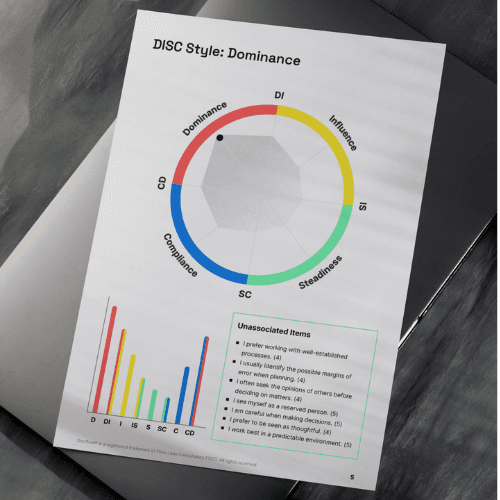
A DISC assessment is a behavioural profiling tool that measures how people tend to behave, communicate, and respond to challenges within a professional or social environment. The model categorises individuals into four primary DISC personality styles:
Dominance (D) – Focused on results, challenges, and control.
Influence (I) – Energised by social interaction, persuasion, and optimism.
Steadiness (S) – Values consistency, harmony, and teamwork.
Conscientiousness (C) – Driven by accuracy, quality, and compliance.
Each person demonstrates a unique blend of these four dimensions, creating a personalised DISC profile. This profile helps uncover what motivates employees, how they make decisions, and where they may thrive or struggle within a team.
The Methodology Behind DISC
The DISC framework originated from the behavioural research of psychologist William Moulton Marston in the 1920s. Modern DISC assessments have evolved significantly, supported by validated psychometric research and robust analysis protocols. The process typically involves:
Online Questionnaire – Participants complete an adaptive survey that measures behavioural tendencies.
Data Analysis – Responses are analysed against normative and adaptive scales, producing a behavioural snapshot.
DISC Report – Participants receive a detailed DISC report outlining their preferred communication style, stress behaviours, motivators, and blind spots.
Coaching or Workshop – Certified DISC training facilitators interpret the results, helping participants link insights to real workplace scenarios.
The strength of the DISC model lies in its simplicity and immediate applicability. Unlike some complex psychometric tools, DISC focuses on observable behaviour, which L&D professionals can easily integrate into performance development, leadership coaching, and team-building programs.

Why L&D Managers Should Use DISC Assessments
Australian businesses are increasingly recognising the need to foster psychologically safe, collaborative work environments. Here’s how DISC assessments empower L&D professionals to achieve that goal:
Enhance Self-Awareness: Employees learn to understand their behavioural tendencies and emotional triggers.
Improve Team Dynamics: By mapping team DISC profiles, L&D leaders can identify strengths, communication gaps, and potential conflict points.
Boost Leadership Development: Leaders trained in DISC principles adapt their approach based on their team’s dominant styles.
Personalise Learning Pathways: DISC insights help tailor training interventions, ensuring content resonates with learners’ preferred styles.
Drive Organisational Culture: A shared DISC language fosters empathy, reduces misunderstandings, and strengthens collaboration across departments.
When implemented strategically, DISC creates a framework for continuous growth and engagement—key metrics that L&D managers are measured on.
How DISC Certification Benefits L&D Professionals
For HR and L&D teams looking to fully embed DISC within their organisation, pursuing DISC certification is a highly valuable step. Certification equips practitioners with the skills to administer and interpret DISC reports, conduct team debrief sessions, and design high-impact workshops that connect behavioural insight with business outcomes.
Key advantages of DISC certification in Australia include:
Professional Credibility: Being a certified DISC practitioner enhances your reputation and capability as an L&D expert.
In-House Capability: Conduct your own DISC training sessions without relying solely on external facilitators.
Customised Programs: Tailor workshops to your organisation’s learning frameworks and leadership competency models.
Scalable Development: You can apply DISC principles across onboarding, coaching, sales training, and leadership pipelines.
Many Australian providers now offer both in-person and virtual certification programs through platforms like Disc Flow, which combine behavioural theory with emotional intelligence applications, making the learning experience even more impactful.
Interpreting DISC Reports for Actionable Insights
Once an employee completes their DISC assessment, the resulting DISC report becomes a rich source of data. However, the value lies in interpretation and application. As an L&D professional, your role is to help learners translate behavioural awareness into tangible growth actions.
Here are a few tips for using DISC insights effectively:
Focus on Strengths: Frame discussions around what each style does best rather than what they lack. This promotes engagement and ownership.
Coach for Flexibility: Encourage individuals to adapt their tone, pace, or decision-making approach depending on their audience.
Map Team Profiles: Use a team DISC style chart to identify complementary behaviours and potential friction points.
Link to Goals: Integrate DISC learnings into performance objectives, mentoring conversations, and skill development plans.
By embedding DISC language into ongoing coaching and feedback cycles, L&D managers can create a culture where behavioural awareness becomes second nature.

Integrating DISC Training into Organisational Learning Programs
The most successful organisations don’t treat DISC training as a one-off workshop. They weave it through all levels of learning and leadership development. Some effective integration strategies include:
Onboarding Programs: Introduce DISC early to help new hires understand team dynamics from the start.
Performance Reviews: Incorporate behaviour-based reflection questions using DISC terminology.
Leadership Academies: Teach aspiring leaders to flex their management approach according to their team’s DISC profiles.
Conflict Resolution Sessions: Use DISC insights to reframe misunderstandings as differences in communication preferences, not intent.
In multicultural workplaces common across Australia, DISC can also help bridge cultural communication differences, making teams more cohesive and productive.
The Future of DISC in Australian Workplaces
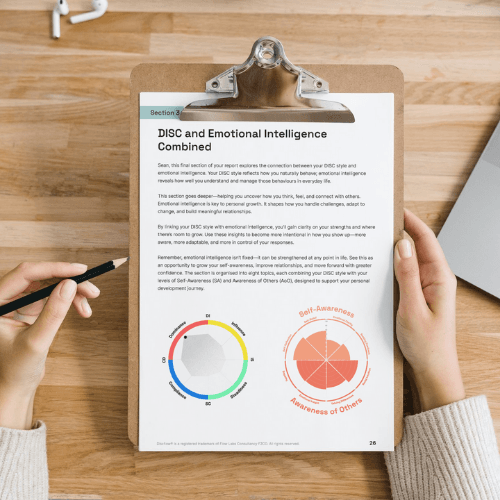
As hybrid and remote work continue to evolve, understanding behavioural diversity is more crucial than ever. Australian L&D managers are increasingly turning to evidence-based tools like DISC personality assessments to navigate this shift. Modern DISC platforms, such as Disc Flow, are advancing the model by integrating emotional intelligence (EQ) insights, making the reports not just descriptive but developmentally prescriptive.
With this combination of DISC personality and EQ, employees can recognise how their behaviour impacts others, learn to manage reactions, and communicate with greater empathy. The result is a more resilient, engaged, and high-performing workforce.
Key Takeaways for L&D Professionals
DISC assessments provide a practical, psychology-based lens for understanding and developing people.
A structured DISC training program enhances communication, teamwork, and leadership capabilities.
Pursuing DISC certification enables internal talent teams to apply these insights at scale and with credibility.
When used continuously, DISC becomes a shared language that underpins a culture of respect, adaptability, and growth.
For Australian L&D professionals, the message is clear: DISC isn’t just a behavioural test; it’s a catalyst for transforming how your organisation learns, leads, and collaborates.